To gain peace of mind about early problems and create a solid basis for efficient future operations, companies building new electrical infrastructure should invest from the start in digital monitoring technology combined with remote expert support.
Many businesses are building new electrical infrastructures – whether to support new facilities or extend existing ones. As electrification becomes more critical, it’s also becoming more unstable, driven by factors like the growth of renewable sources, the cost of electricity, climate change, and more. At the same time, according to McKinsey, the rise of AI is massively accelerating the demand for data center capacity – from 55 Gigawatts in 2023 to 219 Gigawatts in 2030. Meanwhile, as sites including hospitals, factories and supermarkets grow, they all need supporting electrical systems to distribute power.
The brand new electrical distribution equipment, such as switchgear, within these infrastructures is often expected to have a lifespan of decades – and for this reason, the question of how to operate and maintain it may not be seen as a priority by the businesses installing it. However, managing electrical assets has never been as challenging as critical as it is today, meaning that traditional asset management strategies are not enough. Moreover, many companies are struggling to find the right resources – both human and material – to do so effectively. The answer is to rethink asset management strategies from day one – an approach that helps avoid unexpected early costs, ensure business continuity, minimize safety risks and lay solid foundations for efficient asset management in future.
At Schneider Electric, we support our customers in shifting to proactive electrical asset management. Under this approach, rather than waiting until issues arise before tackling them, organizations take ongoing and informed action to keep their systems consistently operating at their best. Electrical asset managers anticipate and address emerging problems before they cause major inefficiencies, or require expensive shutdowns and repairs. In this way, they can minimize system downtime, extend the lifespan of their equipment and reduce inefficiencies. And over time, they can move towards condition-based maintenance, where infrastructure is maintained when required – according to its actual condition, rather than just fixed schedules. We’ll explore this maintenance approach later in the blog.
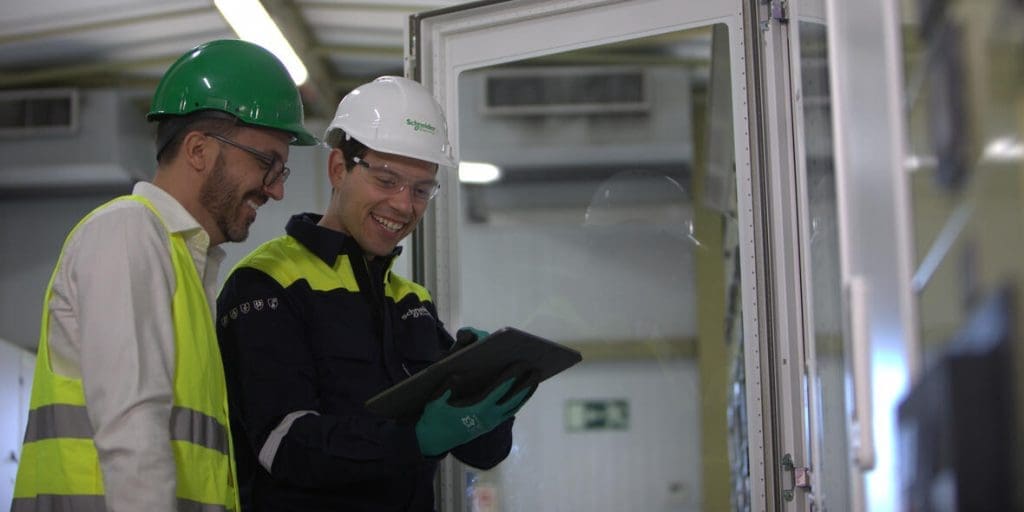
To move towards this approach, organizations need a comprehensive view of their electrical systems – something Schneider Electric makes possible through our technology and services expertise. Our components are connected to the IoT through digital sensors, which can be installed on existing assets, but we are increasingly incorporating them into new equipment by default, in the factory, supporting the reliable remote monitoring of electrical assets from the moment of installation.
These sensors provide continuous information onhow the system is functioning, based on metrics such as temperature, wear and aging. Using cloud-based, AI-powered models which are continuously improved by over 300 in-house data scientists, we then analyze the sensor data to generate detailed insights. Through our EcoCare* services membership, a next-generation service plan, our experts can monitor these analytics remotely to identify whether the electrical assets are working as they should, and where there are potential problems and inefficiencies.
Remote monitoring to increase system safety and reduce downtime
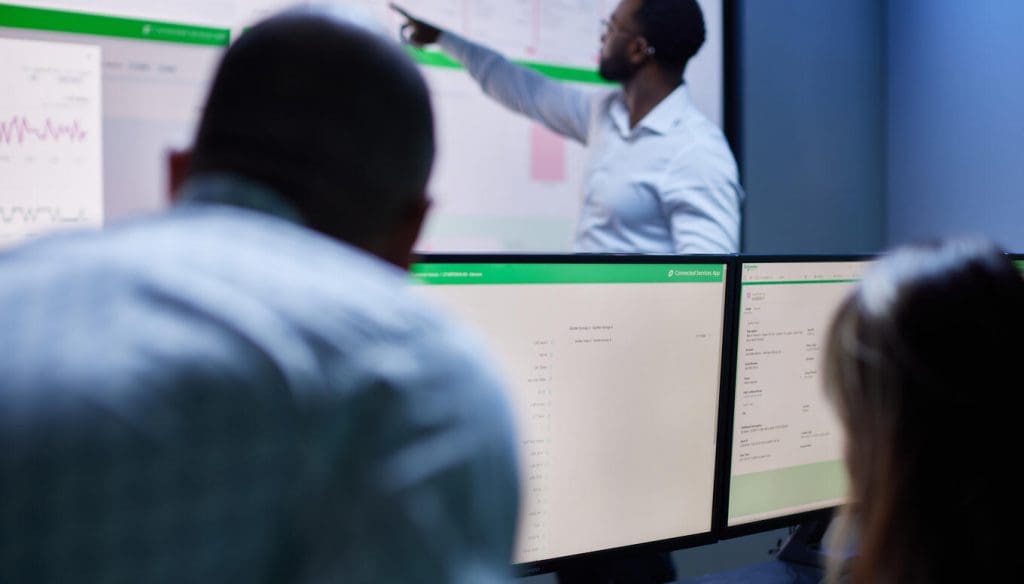
This digital monitoring helps businesses optimize the performance, safety and efficiency of their electrical systems. And it’s beneficial for new as well as aging infrastructure – because no matter how reliable the equipment itself is, unpredictable external factors can impact performance and uptime: environmental conditions, dust, wildlife intrusions, network energy quality, or simple human error. These challenges can arise from day one – you can’t keep electrical equipment in a glass case. And even if the components are still under warranty, support teams may not be able to respond quickly and effectively unless they can leverage a proactive approach that uses remote monitoring and analytics.
As well as creating inefficiencies, over time these issues can also produce further problems – including partial discharge and thermal overheating – which can in turn cause outages and fires. If left unaddressed, partial discharge can even develop into a highly dangerous arc flash explosion, where temperatures reach a level comparable to those in the sun. So poorly installed equipment presents a major risk to the safety of the site and its staff, as well as potentially creating large financial losses.
For electrical distribution equipment, EcoCare allows customers to reduce electrical failure risk and unplanned downtime by up to 75%.
Monitoring assets from day one also helps ensure that the commissioning of an electrical installation runs smoothly, limiting the risk of unexpected events and delays.
Our work with Nestlé at its Nescafé plant in Toluca, Mexico – the largest soluble coffee factory in the world, producing about 50,000 jars every hour – is a great example of that. We’ve worked with the facility to put in place increasingly comprehensive digital monitoring of its electrical infrastructure. A 14-hour shutdown in 2020 due to a short circuit, which led to losses of more than half a million US dollars, highlighted the risks the business faced. But by implementing EcoCare services membership throughout the site, the company is now able to quickly identify and address potential problems. As well as securing safety, the combination of Schneider Electric’s technology and remote expert support allows Nestlé to avoid the losses and disruption of unplanned downtime. Between 2020 and 2024 we sent the company a dozen alerts about potential or imminent equipment issues – allowing the plant to avert five major stoppages and save an estimated USD $2m.
The value of remotely monitoring electrical infrastructure to improve service continuity and equipment health is also demonstrated at hundreds of other customer sites we’ve connected, including thousands of assets under management. Organizations that put in place a proactive approach to managing electrical infrastructure from the beginning can start to see these benefits from day one.
Gathering system insights to support condition-based maintenance
A further advantage of connecting and monitoring equipment from the point of installation is that it allows us and our customers to accumulate rich system insights that support future efficiencies. By observing the performance of electrical infrastructure over years, we can build an in-depth understanding that informs effective long-term planning. Electrical asset managers can develop a proactive, condition-based maintenance approach to managing and maintaining their equipment – intercepting issues early, before they can impact safety, efficiency and productivity. In many cases, this allows businesses to extend the periods in between routine maintenance shutdowns (or carry out urgent maintenance ahead of schedule if needed). Nestlé’s Toluca plant, for instance, has now moved from an annual to a biannual schedule, a smarter maintenance scheduling.
The advantages of this approach are substantial throughout the lifetime of an asset: for electrical distribution equipment, we help reduce planned downtime by up to 40% and for 3-Phase uninterruptible power supply (UPS) units, they can reduce intrusive on-site interventions by up to 50%, which is a “must” specially for data centers who find human error as one of the major causes for outages, according to Uptime Institute.
And EcoCare is much more than a maintenance plan. Alongside remote monitoring and 24/7 priority access to our expertise, this service plan also offers a range of other benefits, including an extended warranty period and discounts on spare parts, on-site intervention and training.
We offer three different EcoCare tiers, with all levels including system monitoring and alarming, and more advanced options providing additional consultancy and analytics to support condition-based maintenance. This flexibility makes digital monitoring with EcoCare a cost-efficient way for organizations to begin gathering system insights. Many businesses have used it and realized considerable savings. In the first three years of using EcoCare for condition-based maintenance, Compass Datacenters achieved a 40% reduction in intrusive on-site maintenance and cut the total cost of equipment ownership by 20%.
The return on investments like this increases over time. As electrical assets age, they’re more likely to develop faults and inefficiencies that require maintenance, potentially leading to significant costs and downtime. At this point, businesses without a clear understanding of their equipment will be scrambling to catch up. In contrast, those who invested in monitoring their infrastructure from the start will have the insights they need to manage it efficiently and cost-effectively. In this way, those who invest in proactive electrical asset management from day one not only see an immediate impact, but also create a robust basis for future growth.
Find out more about how taking a proactive approach to electrical asset management from day one supports cost-effective and reliable operations. Download the ARC white paper: A Downtime-Free Future in Industry: Strategic Initiatives for Enhanced Reliability.
* Please verify the availability of EcoCare in your region through a local services sales representative. If EcoCare is not yet available, you can leverage EcoStruxure Service Plan.




Add a comment