In 2024, the National Oceanic and Atmospheric Administration forecast that 13 Atlantic hurricanes of category one or above would hit the east coast of North American between June to November.
Each year, during hurricane season, power outages are commonly experienced with millions of homes left without electricity, either due to issues with grid power production or damage to power lines. In fact, high winds, rains, winter storms and tropical cyclones accounted for 80% of power interruptions over the last 20 years, according to Climate Central, and severe storm outages have also increased by 74% compared to 10 years ago.
A growing number of homeowners are looking to make their properties resilient to these power outages and are turning to solutions like solar and battery storage. With a home energy management system like Schneider Home, an integrated energy management system designed to enhance grid resiliency, reliability, and energy efficiency, homeowners are becoming energy prosumers who can keep their homes up and running during these extreme weather conditions.
We spoke to two customers who experienced power outages last summer during Hurricane Beryl – a storm that left over 2.6 million homes in Texas without electricity – to learn how Schneider Home helped them.
Bradley, Rockwall, Texas
Bradley is the owner of a 2,700 ft sq. single-story, 3-bedroom home in Rockwall, Texas. Alongside a 4-ton heat pump, he recently made the switch to a renewable energy source and installed solar panels in 2023, followed by a battery back-up for the whole home, as a way help save energy and reduce his carbon footprint to have a positive impact on the environment.
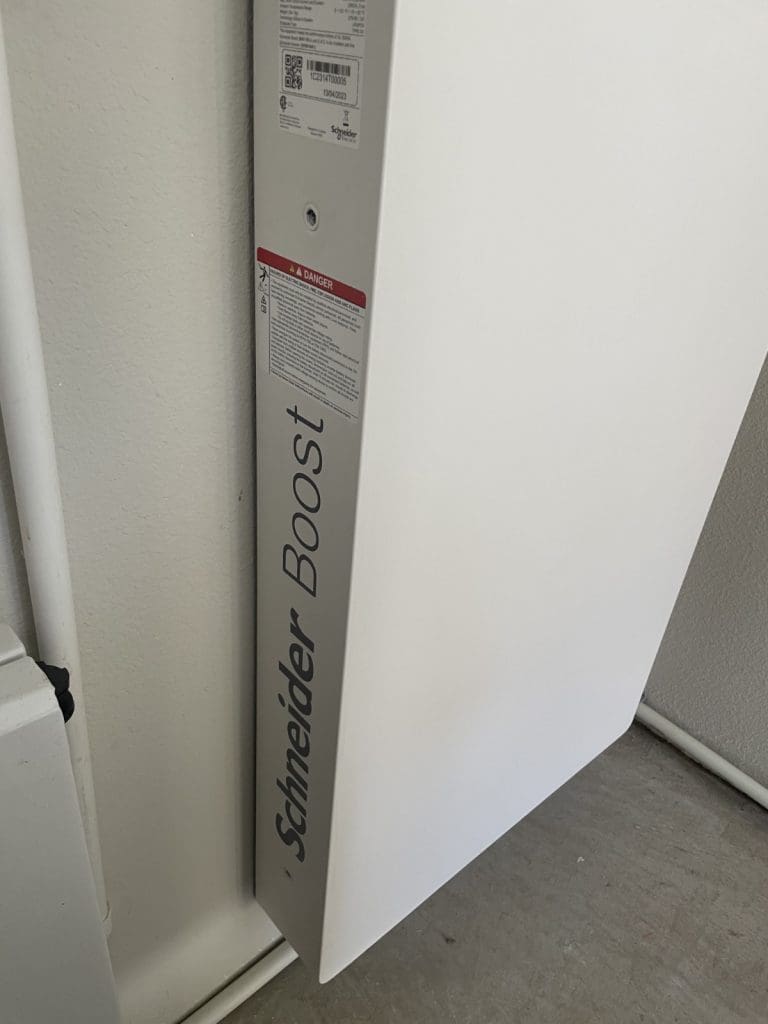
Since installing the system and utilizing Schneider Home to manage it, Bradley has experienced the energy savings that he wanted for over half of the year.
When Hurricane Beryl was announced, Bradley’s Schneider Home system took care of itself, without the need for any manual input. Although he had already set the battery reserve at 33%, the solar panels charged the battery to 100% automatically before the storm hit.
When Power outages hit his home throughout the daytime, lasting for roughly 10 hours, however everything worked as design with the entire house being backed up by solar and battery for the whole day. This allowed Bradley to keep his critical loads, including his fridge freezer, work PC, internet router and switches, running with minimal impact on his daily routine.
Srikar, Sugar Land, Texas
Meanwhile, in Sugar Land, Texas, Srikar has 40 solar panels installed to power his 4,600 sq ft, 5 bed, 5.5 bath home, which also includes two HVAC systems, an EV charger, and a home spa.
Srikar’s solar panels are split across two different inverters – half to a Schneider Electric solar inverter and half to a third-party inverter – and the system also incorporates a Schneider Electric Boost back-up battery. By utilizing the Schneider Home system, Srikar can combine all the components into a single app, where he can view all his energy consumption and manage them effectively day-to-day.
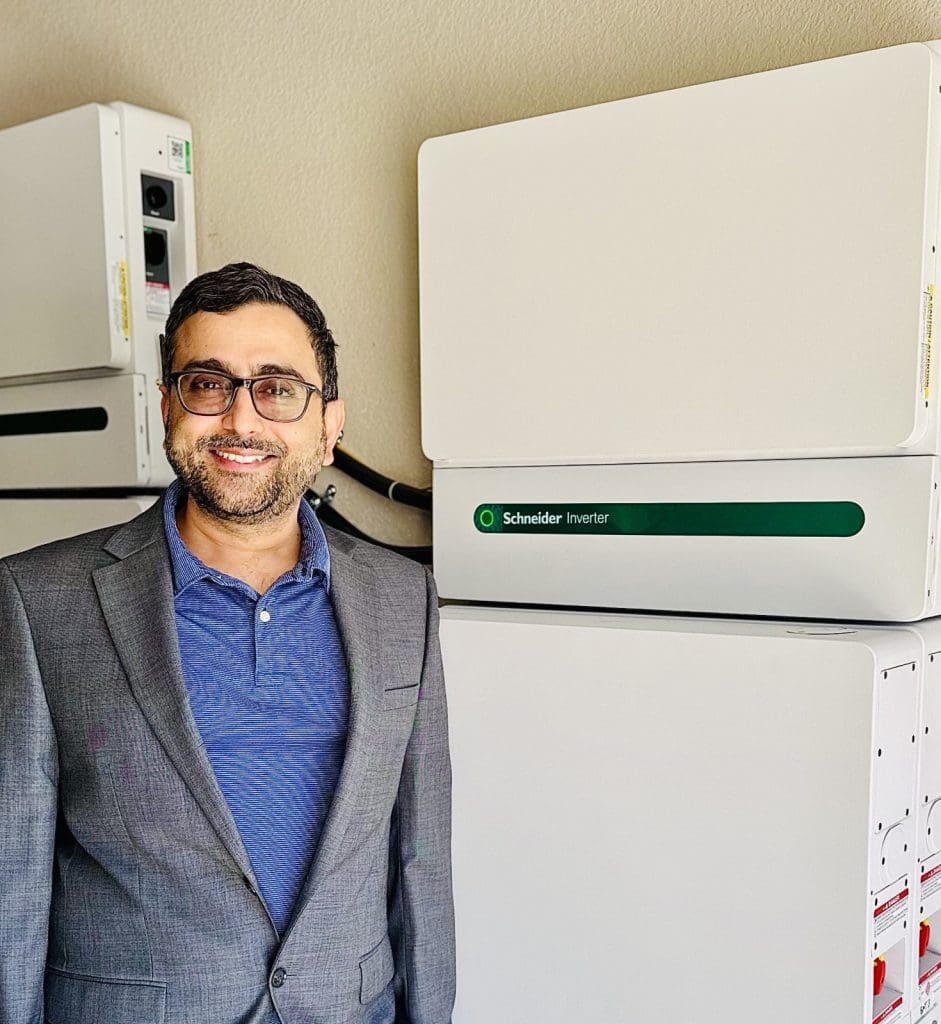
Typically, the solar system can generate 80kw energy per day, and based on the household’s daily level of consumption, it meant that in the evenings, Srikar and his family can use the stored excess power to effectively power the home for free, instead of drawing from the grid.
During Hurricane Beryl, Srikar’s home experienced a 5-day power outage, due to damaged power lines. However, as a solar-energy prosumer, he was able to keep his home powered throughout this period, thanks to the Schneider Home system.
With the ability to keep generating and storing power during the day, Srikar and his family only needed to make minimal changes to the electrical devices they were using, without any major compromises. With the Schneider Home app, they could view where energy was being consumed and how much energy was left in the battery, and used this information to make informed decisions about whether to turn off or limit the use of certain devices around the home.
While the EV charger and home spa were not connected to the battery back-up, one of the most important loads in the home that they wanted to keep running was their air conditioner – especially given that the hurricane hit in the middle of the summer. With the system in place, they were able to keep the smaller HVAC unit running to keep cool.
With the family all at home, it was the first time his children had experienced a hurricane while having the Schneider Home system. During the outage, they were very interested to see how the battery was doing, all of which could be seen on the Schneider Home app.
Helping homes become more resilient
For properties already benefitting from solar or for those interested in introducing solar, solutions like Schneider Home can offer peace of mind for homeowners looking to improve their homes’ resiliency in preparation for power outages caused by extreme weather conditions. In addition to choosing what to power on the fly and maximizing battery runtime, it can prioritize battery charging to make sure it’s fully charged if there is a likelihood that the grid would go down. With Schneider Home, installers can help power more of what matters to their customers.



Add a comment