Too often, sustainability efforts stall under a cloud of hesitation. Leaders may say they care, but doubts soon emerge: Do we possess the necessary skills? Can we afford this transition? Will it disrupt our operations?
Meanwhile, climate change, markets and younger generations aren’t waiting. At Schneider Electric, we’ve discovered that sustainability isn’t a sidebar—it’s at the core of business resilience, innovation and market leadership. In today’s world, it’s not optional—it’s essential.
A two-decade journey
Our sustainability journey began nearly two decades ago—well before the green agenda became mainstream. It hasn’t always been easy. We faced unclear standards, slow returns, and transitional hurdles. But we remained steadfast. Today, our efforts are recognised by TIME, The Straits Times, and top sustainability indices worldwide—not for optics, but for real impact across operations, supply chains, and solutions.
This journey has taught me that sustainability isn’t an endpoint. It is a discipline—one that requires courage, consistency, and the conviction that doing what’s right also makes great business sense.

Mindset shift: From penalties to purpose
In Southeast Asia—and particularly in Singapore—sustainability policies like the Green Plan 2030, carbon taxes, and ESG reporting are gaining momentum. Initial compliance is often driven by the risk of penalties. Yet true leadership emerges when sustainability becomes a strategic advantage, not just a compliance checkbox.
Research from The Economist shows that companies adopting sustainability to enhance reputation and profitability gain a real edge. And discussions at recent sustainability forums affirm that strong ESG performance is increasingly a business differentiator.
Southeast Asia: Where sustainability meets opportunity
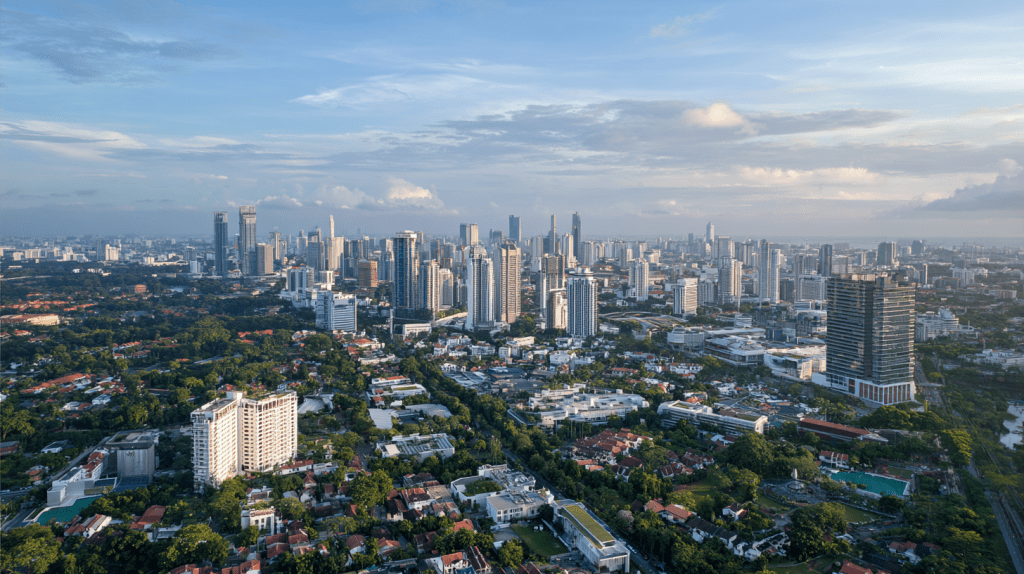
The region’s rapid urbanisation, escalating energy demands, intricate supply chains, and climate vulnerabilities present real challenges. Yet its strengths—a young workforce, entrepreneurial drive, and growing regional collaboration—make it a powerful ground for sustainability-driven innovation.
Singapore’s Green Plan 2030 is a case in point: it aims to quadruple solar capacity, create green jobs, develop green finance, and position the nation as a carbon services hub. These are not defensive measures—they are bold investments in competitiveness and resilience.
The business benefits of sustainable discipline
- Cost Reduction
Energy efficiency and resource optimisation directly reduce operating expenses—a critical buffer during economic downturns. - Brand and Talent Strengthening
Employees—especially younger generations—seek purposeful organisations. A strong ESG culture boosts morale, retention, and recruitment. - Investor Confidence
Sustainability readiness is increasingly tied to investor valuations and capital access. - Innovation and Market Positioning
Businesses that build products and operations with sustainability in mind—such as modular, scalable decarbonisation—open new revenue streams and gain competitive first-mover advantage.
A personal perspective
I have lived and led in Korea, Brazil, Europe, the US—and now Southeast Asia. I’ve seen the damage wrought by environmental neglect—and the strength that emerges when communities act in unity. My conviction didn’t ignite in a single moment but through a lifetime of witnessing both strain and solutions.
Today, I feel this urgency as a leader, a father, and a global citizen. We owe future generations more than good intentions. We owe them action. Each step we take today lightens the burden of tomorrow.
The time to lead is now

Sustainability is no longer an optional add-on. It’s a prerequisite for survival and success.
The question is not whether we should act—it is how boldly and how together we will step forward.
At Schneider Electric, we help organisations turn sustainability from a challenge into a competitive advantage, with tailored, measurable, and scalable solutions. Because this isn’t a race against each other—it’s a race against time.
Explore how Schneider Electric’s modular sustainability solutions are helping businesses across Southeast Asia accelerate their journey to Net Zero—and turn responsibility into leadership.
👉 Curious about the future of energy leadership? Join me and industry peers at the upcoming CXO Breakfast to explore these trends in depth.



Add a comment