After years of progress, sustainability is at a crossroads as global sentiment diverges on the urgency of climate action.
Under economic and security pressures, businesses and governments are re-examining their sustainability commitments. Several large financial institutions have exited the Net-Zero Banking Alliance, for instance, causing ripple effects across the industry.
Yet, the cost of climate action is falling. Thanks to digital innovations, cooling buildings and data centres will become cheaper and more efficient over time.
At Schneider Electric’s recent Innovation Day, our premier stakeholder event in Singapore, I had the opportunity to interact with customers and partners; and share some of the best practices and cutting-edge technologies that are shaping the future of energy efficiency.
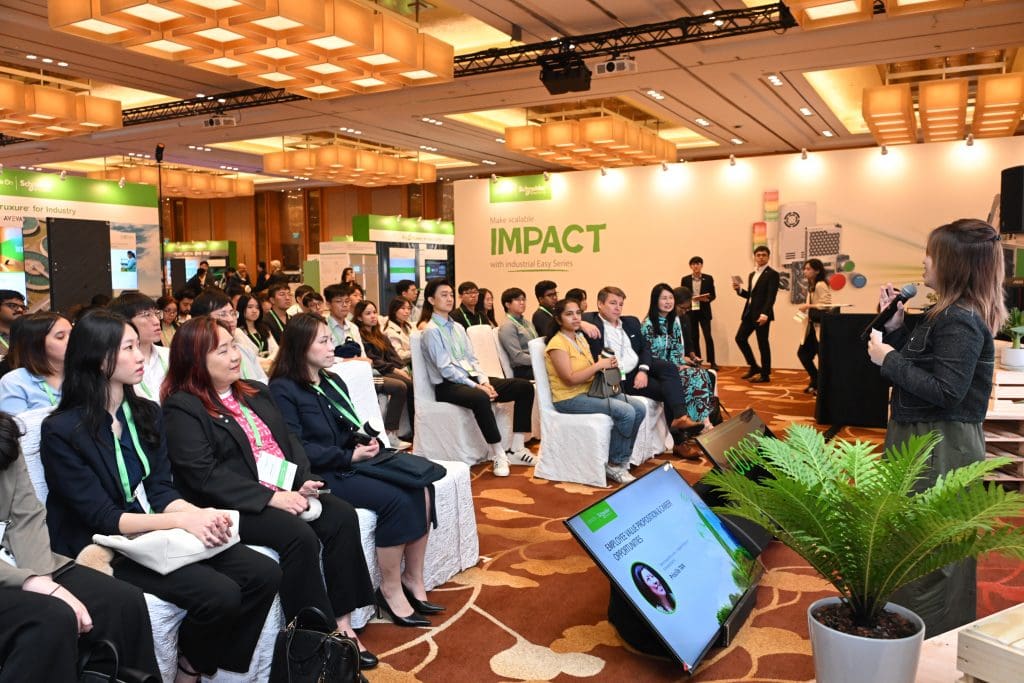
Attendees of this year’s Innovation Day listening to one of the talks.
We also had the privilege of having Mr. Lee Chuan Teck, Chairman of Enterprise Singapore, grace our event in the capacity of Guest of Honour.
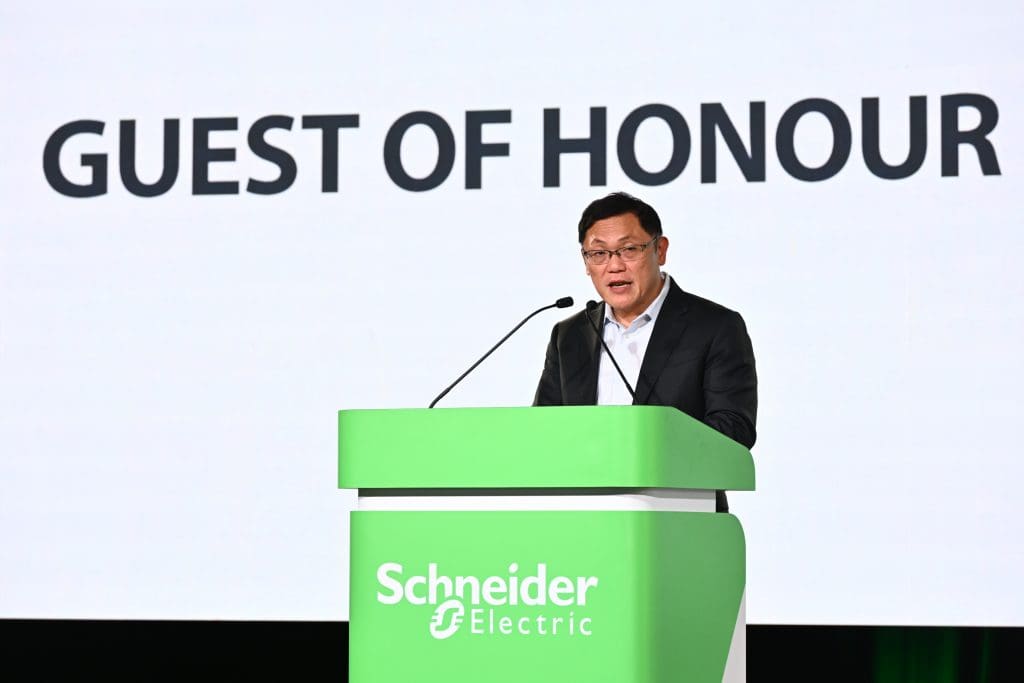
Mr. Lee Chuan Teck, Chairman of Enterprise Singapore was Guest of Honour at this year’s Innovation Day
My takeaway from that day: Business owners who choose to invest in climate action now are likely to reap the benefits in the long run.
Data centre and built environment demands
To strengthen its position as a global digital hub and keep abreast with the artificial intelligence (AI) and cloud computing boom, Singapore has been investing heavily in data centres.
These data centres are energy intensive, operating 24/7 to support critical digital infrastructure. Beyond their direct power consumption, they also require extensive cooling systems and supporting infrastructure to maintain optimal temperatures and ensure uninterrupted performance.
Singapore, which remains committed to achieving net-zero status by 2050, has therefore been pushing data centre owners and operators to decarbonise their operations.
A similar decarbonisation trend can be seen in Singapore’s built environment sector. Developers are exploring novel means to combine unique architectural designs with various smart building solutions.
One such example is the Punggol Digital District, which will house the country’s first-ever district-level smart grid. This smart grid will be able to monitor and adapt to energy demand patterns, integrate solar energy as a source, and use battery energy storage systems to optimise energy efficiency.
AI and digital technologies
For both the data centre and the built environment sectors, the deployment of AI is becoming instrumental crucial to improving energy efficiency and optimising resource management.
In data centres, AI-driven energy management solutions help regulate cooling, predict power demand and distribute energy more efficiently – contributing to optimal power loads, minimising waste, reducing operational costs and improving long-term resilience.
In the real estate sector, AI-powered building management systems can dynamically adjust cooling and lighting based on occupancy patterns. They can also predict when maintenance will be needed. Digital twin solutions, meanwhile, allow real-time simulation and optimisation of building performance by creating virtual replicas that mirror physical assets.
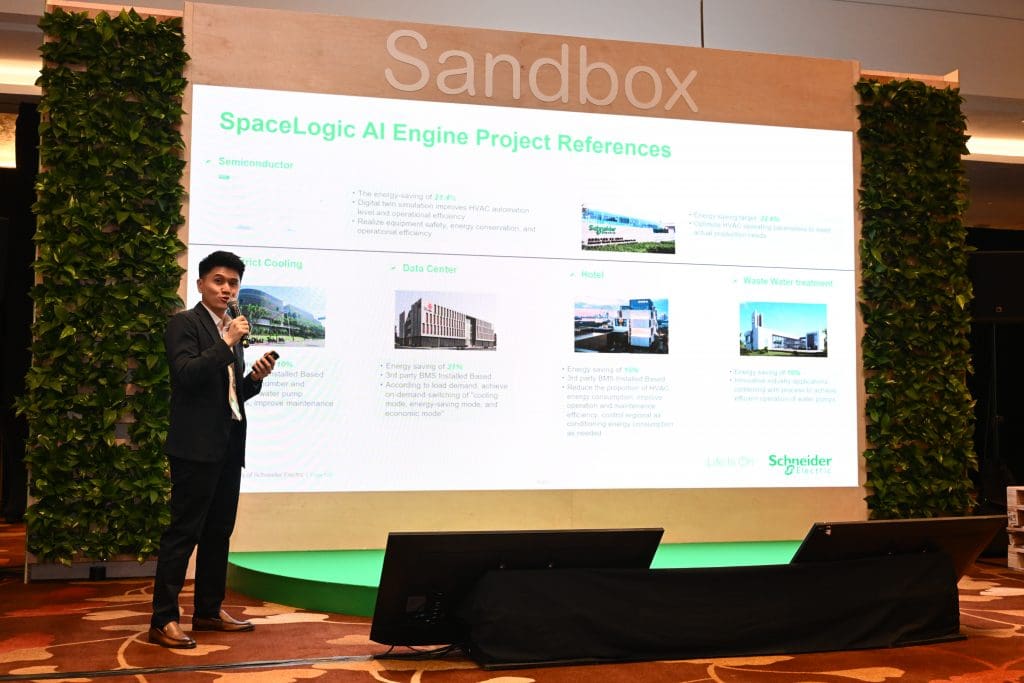
AI is transforming data centres and buildings by optimising energy use and resource management through smart, predictive systems.
Collaboration supports innovation
The above-mentioned technologies are developing rapidly, which can make implementation complex and even costly.
Nevertheless, business leaders should not be deterred. I believe collaboration is the key to unlocking the benefits of innovation. By sharing insights and strategies, and forging strategic partnerships, companies can sidestep common challenges and develop commercially viable solutions that accelerate their sustainability goals.
As a global leader in energy management and automation, Schneider Electric is committed to building strong partnerships to drive sustainable development.
To give an example: At this year’s Innovation Day, we signed a memorandum of understanding with CPG Corporation to advance Singapore’s green infrastructure initiatives.
The collaboration encompasses cross-support on tenders, carbon advisory services and joint content creation at CPG-hosted events and functions. Through this partnership, Schneider Electric and CPG Corporation aim to contribute to Singapore’s sustainable urban development by leveraging their combined expertise.
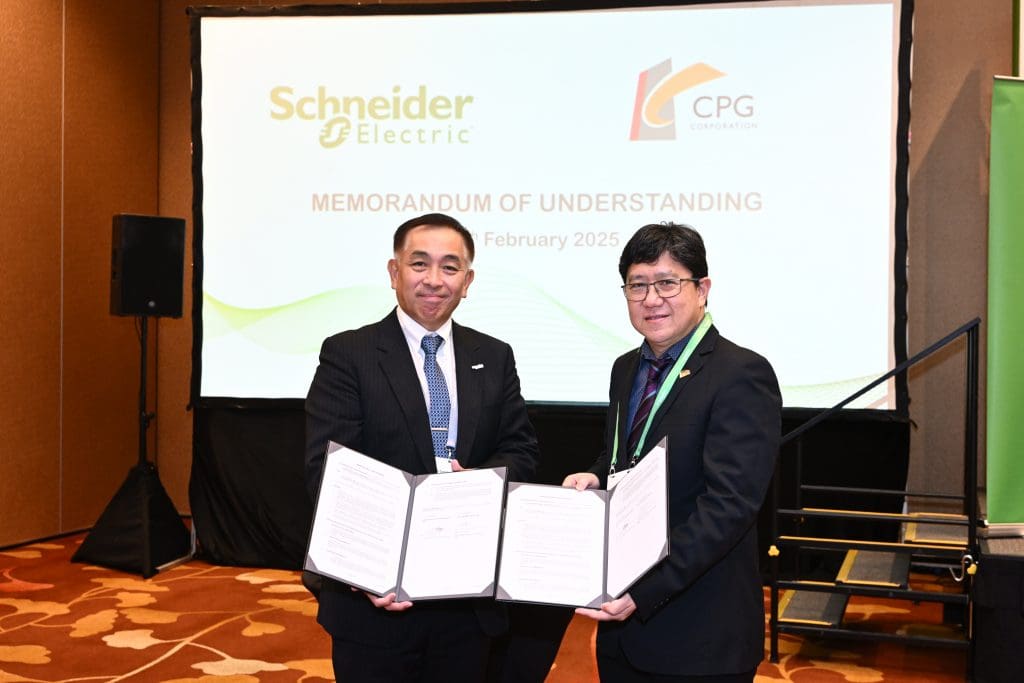
Schneider Electric and CPG Corporation inked an MoU at this year’s Innovation Day to advance Singapore’s green infrastructure initiatives.
Achieving net-zero emissions may have a short-term price, but in the long run it is sure to pay off. As Mr. Lee noted in his opening speech, achieving net-zero emissions “will not be easy nor cheap,” but businesses that act now can benefit from early adoption and cost efficiencies in the long run.
Through collaboration and innovation, businesses in Singapore can take greater ownership of their sustainability journeys, scale best practices, and leverage digitalisation and breakthrough solutions across industries.



Add a comment