Energy powers everything. Homes, hospitals, jobs, education, even hope. Without reliable, affordable, and clean energy, none of those can function well. Yet over a billion people around the world still lack access to sufficient energy for a decent life.
This is energy poverty. And it’s more common—and more complex—than it may first appear.
The many faces of energy poverty
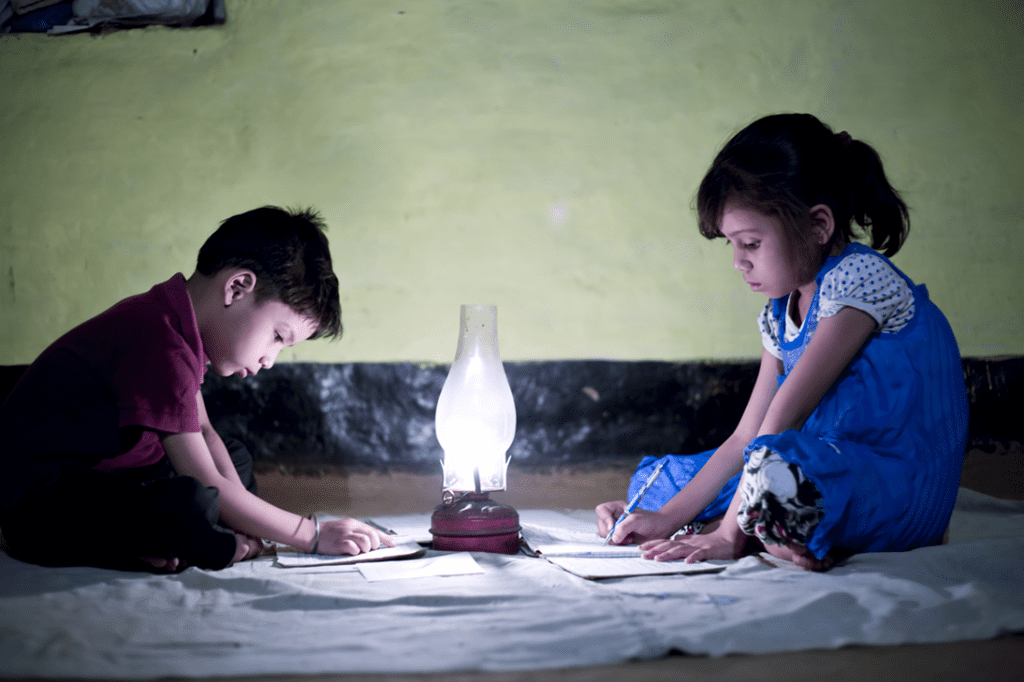
Energy poverty extends far beyond being disconnected from the grid or unable to afford power. It shows up as price spikes, polluting fuels for cooking, inadequate heating or cooling, and unreliable access to electricity. It happens in remote villages and urban apartments. It manifests when Portuguese students weigh the choice between paying in full for electricity or rent, or when an elderly Pakistani man almost dies during a heat wave because the grid failed just when he needed air conditioning most. It’s when an American child is too cold to concentrate on homework because their parent can’t afford to heat their home adequately. Or when a woman in India cooks over a fire that harms her lungs and exposes her to risks of potentially appearance-altering burns.
Access the new report: Energy poverty: And the many ways that safe, affordable, sufficient, and sustainable energy for all empowers.
Estimates vary, depending on how energy poverty is measured, but the number of people facing energy poverty ranges from 666 million to more than 3 billion. Even the lower end points to a massive gap. In low-income countries, the focus is often on access. In middle-income countries, there may be access, but it’s not reliable. In wealthier countries, affordability becomes the bigger challenge. In all, energy generation contributes to carbon pollution, air pollution, and depletion and destruction of natural resources. Everywhere, the results are the same: limits on health, education, security, and opportunity.
A deeply interconnected challenge
Energy poverty never exists in isolation. It is tied to climate change, economic inequality, gender disparity, and geopolitical risk. Renewable energy projects are vital in the fight against climate change. Still, like any infrastructure project, when implemented without consideration for local needs, they can replicate or even exacerbate economic and social inequalities.
This threat exists across borders. Many low- and middle-income countries rely heavily on fossil fuel exports, and the shift to renewables could disrupt their economies and thus governments’ ability to deliver critical services to citizens. At the same time, renewable energy technologies depend on minerals and metals, which are even more geographically concentrated than fossil fuel reserves. So, at least in the short run, the risks of mining-related environmental harm and human rights abuses are not mitigated by an energy transition. That doesn’t mean it shouldn’t
happen, of course. It just reinforces the call for holistic policies, domestic and international, rooted in systemic analysis. The energy transition will shape the next few decades of global development. Whether it does so fairly or simply shifts unjust burdens around depends on the choices we make now.
Technology alone cannot close the gap
Clean technologies play a crucial role. Tools such as smart minigrids, microgrids, and digital controls enhance efficiency and reliability. Advanced systems, including AI, can optimize energy flows, reduce outages and their duration, and balance supply and demand. This can help lower electricity prices. Yet they can also increase total energy use through the so-called “rebound effect” or deepen inequality if upfront investments are not adequately distributed over time and income brackets.
The energy transition constitutes systemic change. Without thoughtful design, gains in one area can trigger new pressure in others. A shift to renewable energy offers enormous potential compared to fossil fuel-based generation, including more jobs, energy independence, higher grid reliability, and significant reductions in carbon and other air and water pollution. However, without strong institutions that can ensure the incorporation of equity and affordability notions alongside techno-environmental solutions, economic and social benefits tend to concentrate among those already well-served.
To realize the full promise of renewable energy technology, these tools must be embedded in policy frameworks designed for resilience, shared access, and long-term sustainability. An example is Denmark’s Samsø Island. Local stakeholders co-financed and co-owned wind turbines, reinvested profits locally, and made energy choices shaped by residents instead of only utilities or developers. The island already reached 100 percent renewable energy for the first time in 2007. Since then, its approach for community engagement has become a model for renewable energy project development around the world. Samsø demonstrates how the energy transition is possible, but only if it’s also just. Inclusive governance is a crucial component of a just transition.
Distributed solutions and shared power
One way to make governance organically inclusive is by pushing down ownership and decision-making power to stakeholders. Here, renewable energy offers a possibility that fossil fuels do not: distributed generation. Micro- and minigrids that use wind turbines or solar photovoltaic panels to generate energy close to where it is consumed can reduce emissions, transmission losses, and costs.
Importantly, this supports cooperative energy models, where communities own and manage their energy assets. Even when still connected to the overall grid, distributed energy allows the blurring of lines between consumers and producers with so-called “prosumer models,” where households can feed some of their energy back into the overall grid to help lower their energy bill, or sell it to others in a rural village to charge their phones. Mini- and microgrids, in this way, can deliver more than just energy: they also support local resilience and energy autonomy.
This is “multi-empowerment:” a model that pairs energy access with jobs, education, and stronger local institutions. Examples from around the world show how these models can scale with the proper support.
Real-world examples of cooperative energy models
In Kenya, minigrids have expanded renewable energy access to rural areas previously left off the main grid. Projects using solar photovoltaic and hybrid systems—often developed through public-private partnerships—have cut household energy costs, improved air quality, and increased evening productivity. These systems frequently operate with digital meters and mobile payments, enabling prosumer participation and community-scale energy balancing. By integrating policy support, local governance, and private innovation, Kenya has developed one of the most advanced off-grid markets in sub-Saharan Africa.
In the United States, the Inflation Reduction Act (IRA) accelerated the growth of community solar gardens that serve low‑ and moderate‑income households. Programs like Solar for All and direct‑pay incentives help affordable housing providers and nonprofits build on‑ or off‑site systems, even without rooftop access. These allow residents to earn bill credits through shared ownership or subscription, expanding clean energy access to communities historically left out.
In Puerto Rico, Casa Pueblo offers a clear model of what a community-driven energy transition can look like. It began in 1980 as a grassroots effort to stop proposed gold, silver, and copper mining that would have devastated the region’s ecosystems. That victory led to something more ambitious: a locally controlled energy strategy rooted in self-management and ecological stewardship. Today, Casa Pueblo operates entirely off-grid, powering its buildings, radio station, and public services with solar energy. Its “Adjuntas Pueblo Solar” project extends this autonomy to schools, elder care facilities, and other critical infrastructure, with residents leading the planning and implementation. The work reflects a broader goal: replacing extractive systems with ones designed for resilience, dignity, and democratic control.
Technology is a crucial part of these success stories, but economic and regulatory settings are also critical. Transparent policy, inclusive governance, and shared ownership are potent tools for addressing energy poverty and can be as indispensable as the physical components.
Systems built for people
Technical fixes alone will not resolve energy poverty. Solutions require a broader perspective—one that integrates energy with equity, well-being, and environmental security. Clean and affordable energy enables health, learning, safety, and opportunity. Without it, these outcomes remain out of reach.
The energy transition must reflect the realities of cost, responsibility, and access. That includes addressing human rights risks in global supply chains, fairness across countries, and gender inequality. These concerns affect not only the principle but also the effectiveness. Fair labor practices reduce supply chain disruptions. Fairness across countries lowers the risk of geopolitical conflict and the weaponization of fossil fuel exports. Involving women and marginalized groups in shaping energy systems leads to stronger, more balanced strategies, as numerous studies link their participation to policy frameworks with broader social benefits.
The tools already exist. Renewable energy technologies, community-led distributed generation, and inclusive institutions can work together to reduce energy poverty. The next step depends on how we apply them—with consistency, fairness, and a focus on long-term outcomes.
Learn more about the global challenge of energy poverty—and how we can solve it together—in the Sustainability Research Institute report: Energy poverty: And the many ways that safe, affordable, sufficient, and sustainable energy for all empowers.



Add a comment