Every April, tens of thousands of athletes gather at the starting line of the Boston Marathon—hearts pumping, minds focused, eyes set on the finish line. It’s been this way since 1897, the year it began. This 129-year-old, iconic 26.2-mile race is the global symbol of endurance, resilience, and the unwavering commitment it takes to reach challenging goals.
This year—and for the second time—I am one of those athletes. I’m running back-to-back marathons in Paris and Boston. During my training, I’ve been ruminating on some interesting similarities between long-distance running and sustainable business practices. Each journey demands substantial preparation, discipline, strategic thinking, and adaptability. True sustainability isn’t just reducing carbon emissions—it’s staying the course to minimize waste, improve energy efficiency, and engage the community to create a lasting impact.

The discipline of sustainability
The hardest part isn’t race day—it’s the months of disciplined preparation that precede it. In many ways, the discipline needed to prepare for and run a marathon mirrors the strategic rigor needed in sustainability initiatives. Both demand meticulous planning, sustained effort, and mindful resource management. Both strive to conserve and carefully allocate resources—whether it’s diet and rest during training or energy and materials in business. You can’t waste time, sleep, or energy. For sustainability, as on race day, minimizing waste and maximizing efficiency is crucial.
Adapting to unforeseen challenges is another critical parallel. There are always disruptions to a schedule. They range from unforeseen, jet-lagged business trips to new and unexpected obstacles. An athlete must constantly adapt training plans to fit changing circumstances. Likewise, sustainability initiatives must pivot in response to shifting environmental regulations, market conditions, or unexpected obstacles. Success depends on agility, foresight, and the resolve to push forward despite headwinds.
Ecosystem and collaborative partnerships
Just as runners rely on support systems, including trainers, running partners, and family, achieving sustainability goals relies on collaboration across extensive ecosystems. Real sustainability isn’t achieved alone. It demands working closely with customers, suppliers, and partners across the entire value chain.
Schneider Electric’s partnership with the Boston Athletic Association (BAA) highlights this relationship. As the official sustainability partner, Schneider Electric will work closely with the BAA to reduce waste, cut carbon emissions, and introduce sustainable practices across all marathon events.
The marathon also offers a unique opportunity to strengthen relationships. This year, I will run alongside colleagues and customers, creating bonds through shared goals and experiences. Sustainability, too, is enhanced by such connections; collective action often leads to innovation and amplified impact.
Athletes as sustainability advocates
Respect for the environment goes hand-in-hand with the running experience. There is increasing awareness within the running community regarding sustainability. Many runners actively choose trail or countryside routes to experience cleaner air and natural surroundings. At large-scale events like Boston, sustainability initiatives like recycling programs, composting, and waste reduction directly benefit runners. I, myself, recycle my running shoes and minimize waste during training runs.
I am also part of Schneider Electric’s SE Green Runners, a global initiative encouraging employees to integrate sustainability and fitness into their lifestyles. This program is part of our commitment to holistic sustainability, extending beyond corporate policies into the personal habits of employees. By cultivating an environment supportive of health and sustainability, Schneider Electric reinforces its values and fosters deeper community engagement.
The sustainability marathon mindset: A long-term finish line
The Boston Marathon is more than a race. It’s a tradition rich with history, symbolism, and aspiration. My hope is that Schneider Electric’s six-year sustainability partnership culminates in Boston becoming “the most sustainable marathon in the world.” Such recognition would reflect the marathon’s commitment to significantly reducing its carbon footprint and adopting innovative environmental practices.
This vision aligns perfectly with the marathon mindset: setting ambitious, long-term goals, staying resilient in the face of challenges, and celebrating incremental progress along the way. Marathons and sustainability share the same truth: meaningful success takes time, patience, and relentless dedication.
Crossing the finish line together
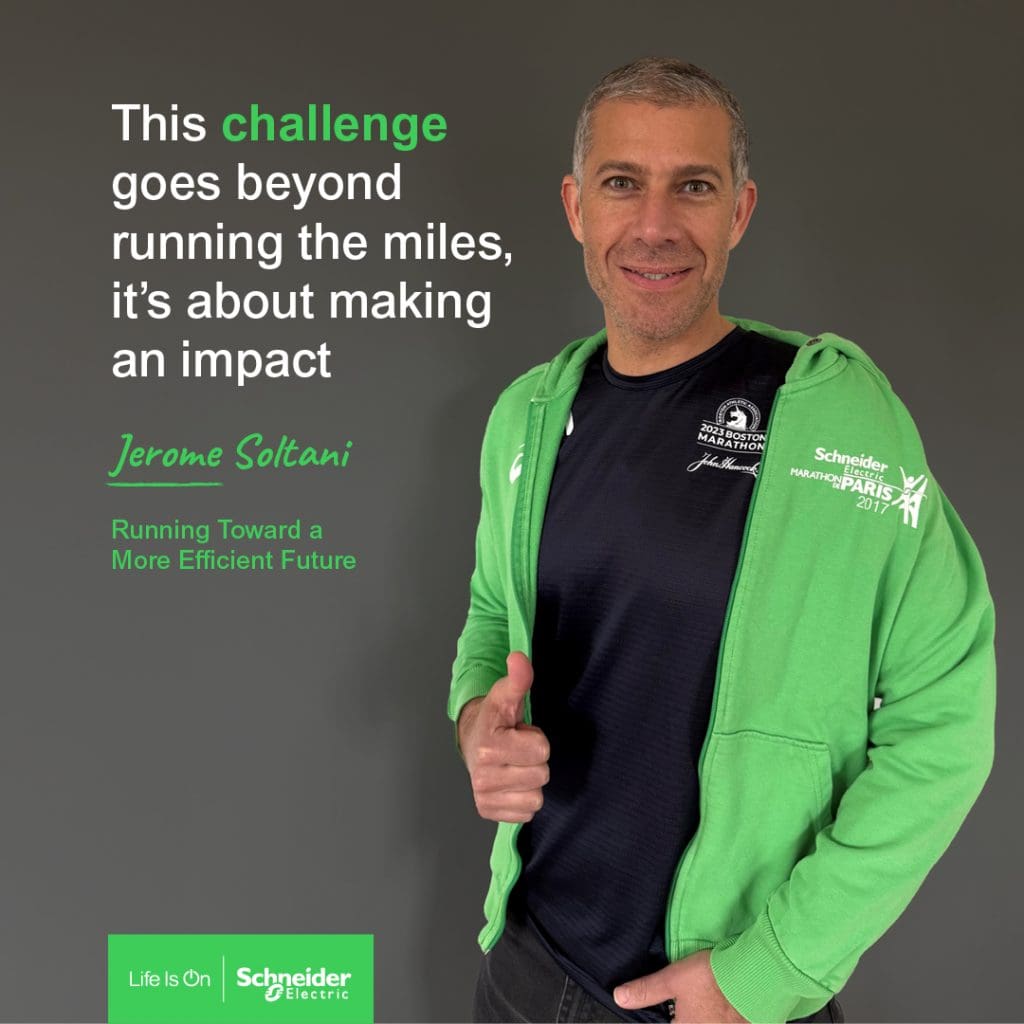
This challenge goes beyond running the miles; it’s also about making an impact. For this reason, I am launching a fundraising campaign for the American Red Cross to raise awareness and support for the organization.
The Red Cross plays a crucial role in our communities by providing shelter, food, and comfort to those affected by disasters. It supplies approximately 40% of the nation’s blood, teaches lifesaving skills, distributes international humanitarian aid, and supports military members and their families. Schneider Electric has proudly supported the American Red Cross for over 50 years, with an annual commitment of $75,000 dedicated to disaster relief efforts.
In sustainability, as in marathon running, every step counts—on the pavement, in business, and in protecting our planet. There is no shortcut to meaningful success. Both demand endurance, strategy, collaboration, and unwavering commitment. The journey is challenging but immensely rewarding. It reminds us that meaningful success demands dedication, persistence, and collective effort.
I am extremely excited and proud to participate in these events organized by an amazing company. I encourage you to act in your community—supporting sustainability initiatives, adopting energy-efficient practices, or joining organizations like the American Red Cross. Small actions accumulate into lasting impacts.
Jerome Soltani is the Senior Vice President for Schneider Electric US Services.
US Services helps organizations from virtually every industry by providing service support across the entire equipment lifecycle—from design and consultation (EcoConsult) to preventive and predictive data-driven maintenance (EcoCare) to modernization of aging equipment and systems (EcoFit™).




Add a comment