Imagine a gold mine where 80% of the gold is left in the ground—it would be a massive waste of resources. This is the reality of industrial data today, with a staggering 80% remaining unused. Vast reserves of information hum silently inside machines and sensors, but most of it remains locked away. Data is still trapped in proprietary systems, isolated databases, and legacy engineering choices. At the same time, European industrial output has been in decline over recent years, underscoring the urgency of turning untapped data into the fuel for competitiveness and growth.
Silos aren’t structures; they’re missed opportunities and barriers that keep data isolated. However, when data can flow across an entire organization, it helps unlock new levels of efficiency and innovation. For example, data sharing can enable manufacturers to utilize artificial intelligence (AI), digital supply chains, and ecosystem-wide collaboration to sharpen their edge. True industrial competitiveness in this decade will come from industrial digital transformation: circulating data from the edge of the factory floor to the enterprise and across entire ecosystems.
The unseen 80%: From hoarding to data circulation
Legacy automation systems, while robust, are often monolithic and closed. While they generate immense volumes of process data—temperature, throughput, energy, pressure—when it is extracted and dumped in data lakes, it loses its context and consistency. This patchwork of data dialects makes enterprise-wide analytics nearly impossible.
The goal is to move from data hoarding to data circulation, where instead of just storing data, it is collected, shared within an organization, analyzed, and redistributed for future use. Success doesn’t just come from capturing every byte, but ensuring the right data is contextualized, trusted, and actionable.
With that foundation, companies can scale value: first within a plant, then across the enterprise, and finally throughout the broader ecosystem.
Beyond isolated success
Many manufacturers have already captured ROI from process control and manufacturing execution systems (MES)—reducing downtime, improving efficiency, and digitizing core processes. These successes help build a solid foundation, but those easy wins can quickly plateau.
The next opportunity lies in climbing further up the software stack by:
- Integrating plant data with enterprise systems
- Deploying AI at scale
- Horizontally distributing data across supply chains
Beyond the competitive advantages that these shifts enable, they also help support sustainability goals. For example, calculating a product’s true CO₂ footprint requires visibility not only into Scope 1 and 2 emissions, but also upstream materials and logistics: (Scope 3).
It’s a clear example of what becomes possible when data flows freely. Transformation doesn’t stop at the factory gate; it extends across the entire value chain.
The ecosystem advantage: Powered by partnership
The biggest leaps in value happen when companies look outward. Collaborations such as those with Valeo, Vawex, and Prosyst illustrate how data-sharing partnerships are already creating new value by helping manufacturers move beyond their own walls to tap ecosystem-wide opportunities.
For example:
- One automotive OEM is using ecosystem-wide data to calculate the CO₂ footprint of components. By aggregating supplier and logistics data, it can measure carbon impact with greater accuracy, meeting regulations while enabling smarter sourcing.
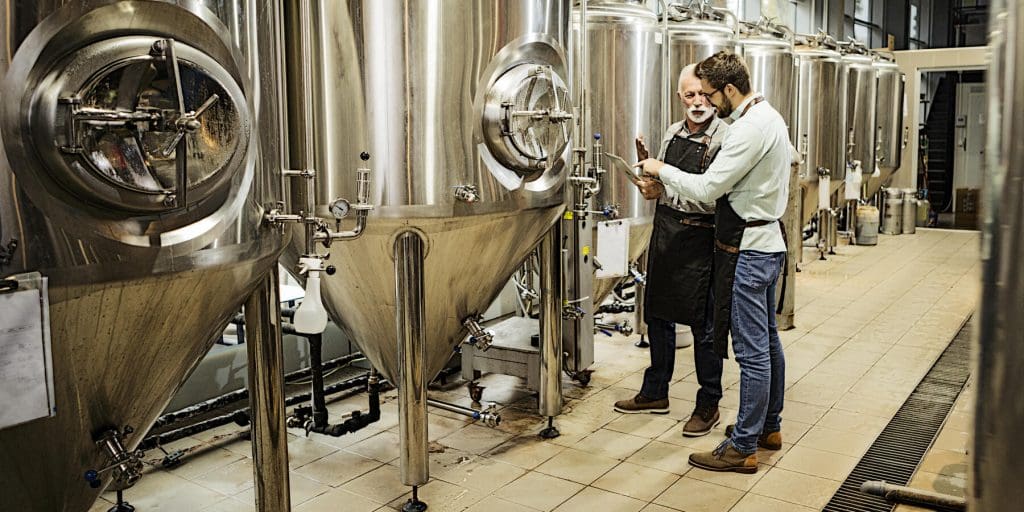
- A global brewer overcame inconsistent data across dozens of connected plants by staging, contextualizing, and standardizing process data. The time saved through standardized data processing sent to the cloud enabled operational process optimization and the ability to benchmark energy use and quality across sites, insights that were impossible under previous systems.
- At the Schneider Electric™ Wuxi factory, a World Economic Forum Advanced Lighthouse, data aggregated from suppliers, production, and field use enabled predictive quality analytics for HMIs and PLCs. This collaboration transformed disparate inputs into actionable intelligence, strengthening supply chain resilience.
The more open data circulation there is across trusted ecosystems, the more value is unlocked.
Technology enablers: Openness and intelligence
Breaking down silos requires new architectures. Open Software-Defined Automation goes beyond a mere virtualization of proprietary PLC hardware; it replaces closed, monolithic systems with open, modular, and standards-based platforms. By embracing this interoperability, manufacturers can future-proof investments and integrate new applications without rebuilding entire systems.
Equally important is a clearly followed sequence:
- Federate and unify the data.
- Define an edge-to-cloud computing strategy tailored to specific use cases.
- Deploy AI and advanced analytics.
Artificial intelligence is important, but only as the capstone; its value depends on abundant, contextualized, and trusted data.
This shift also democratizes data. Information once reserved for specialists can now be used across the organization, from operators to executives, from supply chain managers to sustainability leaders. That democratization accelerates adoption, insights, and cultural change.
Building with trust
No ecosystem thrives without trust. Governance, anonymization, and cybersecurity must be embedded from the start. It gives companies the confidence to share sensitive operational data.
Policy is reinforcing this shift. Programs such as the EU’s Data4Industry and France 2030 are fostering secure common data spaces, while sustainability disclosure rules are pushing companies to standardize carbon reporting. These initiatives set the foundation, but real progress depends on manufacturers taking ownership of their data strategy and treating openness and security as strategic priorities.
Architecting the future
The challenge in European output is a warning, but also an opportunity. The companies that thrive will be those that:
- Put data first: Treat information as a core strategic asset and invest in unification and governance.
- Embrace openness: Build on open, standards-based systems that eliminate silos and increase flexibility.
- Think in ecosystems: Collaborate with suppliers, customers, and partners to create new value pools.
- Build with trust: Make cybersecurity and data privacy foundational, not add-ons.
The goldmine is there. It’s time to start digging. Visit our Industrial Digital Transformation Services to start unlocking your potential.




Add a comment