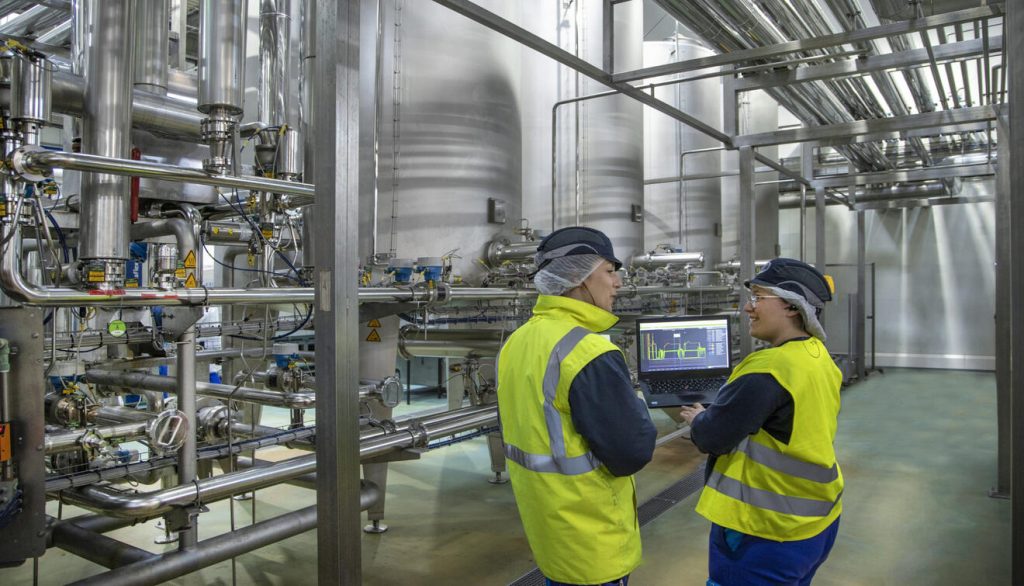
Quality. The make-or-break factor for industrial manufacturing success. By prioritizing a quality-focused approach, embracing digital transformation advancements, and focusing on cost optimization and customer satisfaction, your business can create a path towards more agile, efficient, and resilient operations.
For example, when integrated with traceability, industrial quality management systems provide a transparent view of the entire supply chain, helping enhance trust and accountability. By continuously monitoring products and processes from raw materials to final delivery, companies can quickly address issues, prevent defects, comply with regulations, and maintain operational excellence.
Sounds great, right? To get here, you first need to assess where you are now.
Recognizing a hidden factory
Poor quality has visible costs, like scrap and rework. But it’s the hidden costs of poor quality, such as lost production capacity, extra inventory to buffer against quality issues, and unplanned downtime, that cause the greatest impact.
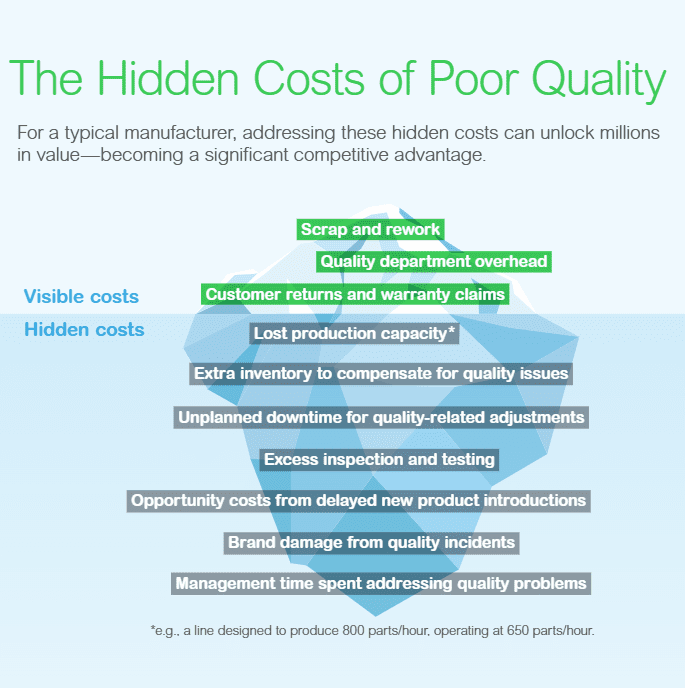
The “hidden factory” concept—unknowingly diverting resources to manage product defects rather than creating value—is key to understanding these invisible expenses. These time and resource-consuming tasks can include:
- Sorting defective products
- Conducting root cause investigations
- Performing rework operations
- Managing customer complaints
- Compensating for delays, which can consume valuable time and resources
These challenges drain resources, resulting in excessive inspection and testing, delayed product launches, and potential brand damage.
The good news is that implementing robust quality and traceability systems, backed by advanced digital platforms, helps make this waste visible, enabling companies to address the root causes.
By reclaiming lost productivity, businesses can redirect efforts towards value-adding activities. This proactive approach to quality management not only improves efficiency but also strengthens customer trust and operational resilience.
Digital transformation for quality improvement
Digital transformation is revolutionizing quality management in industry, and with good reason. By integrating advanced digital tools, organizations can significantly enhance product traceability and improve overall quality outcomes.
This transformation goes beyond simply upgrading technology; it’s about creating a culture where quality is everyone’s responsibility. Digital transformation enables organizations to achieve substantial results, such as a 15-30% reduction in the cost of poor quality and a 5-20% increase in productivity and efficiency.
Adopting technologies like the internet of things (IoT) devices and artificial intelligence (AI), industries can shift from costly and inefficient reactive processes to predictive and preventive quality methods. These advancements help anticipate potential issues, helping ensure consistent quality and minimizing waste. Access to real-time monitoring and alerts empowers teams to make timely decisions and maintain high standards.
Five real-world applications of advanced quality technologies
Advanced quality technologies, such as AI vision systems, have redefined quality management across various industries. These tools provide immediate and measurable improvements, addressing specific manufacturing challenges with high precision and efficiency.
- High-speed steel production: AI vision systems have achieved 95% detection accuracy, eliminating the need for manual inspections and reducing quality-related downtime by 20%. This automation enhances productivity and ensures consistent product quality.
- Consumer Packaged Goods (CPG): AI-driven seal inspection systems reduced leakage defects by 30%. Deep learning algorithms eliminate the need for destructive testing, saving resources and ensuring food safety compliance while reducing waste and boosting consumer confidence in product reliability.
- Life Sciences: Automated optical measurement systems have increased measurement accuracy tenfold while providing complete traceability for regulatory compliance. This 40% reduction in labor costs helped ensure that high-precision components meet stringent standards.
- Food and Beverage: Industrial internet of things (IIoT)-enabled traceability platforms enhanced transparency and accelerated contamination investigations by 70%. This farm-to-fork traceability helps ensure product authenticity and strengthens consumer trust.
- Automotive manufacturing: Integrated traceability systems link components to finished products, reducing the scope of quality investigations by 90%. This precise recall targeting helps ensure that only affected products are withdrawn, minimizing disruption and maintaining customer trust.
These examples illustrate how integrating advanced technologies, such as AI and machine learning (ML), into quality management systems can make hidden costs visible to enhance operational efficiency, early detection and prevention of defects, and customer satisfaction. By adopting these innovations, industries can overcome quality-related challenges and build a resilient, future-ready business.
To take your quality initiatives to the next level with expert guidance and digital innovation, explore Schneider Electric’s Industrial Digital Transformation Services, and download our new eGuide “Digital Transformation for Superior Quality.”


Add a comment