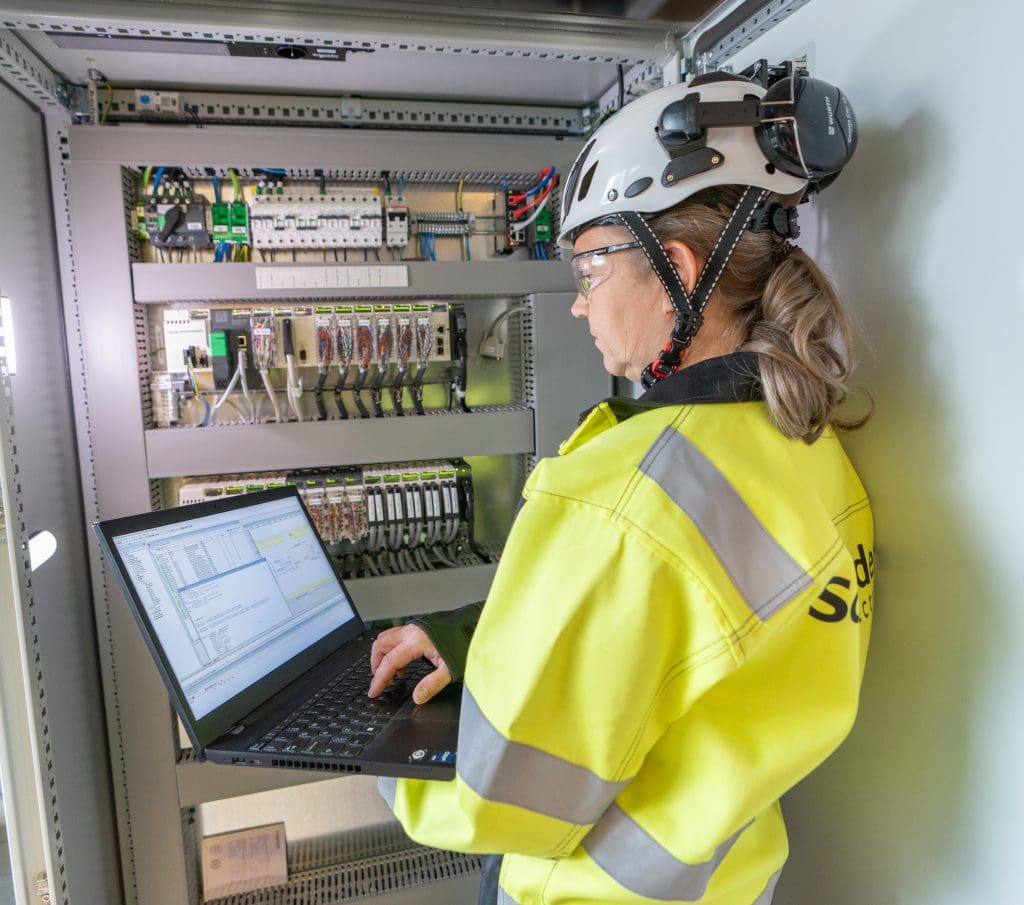
In today’s digital era, technological advancements are accelerating the modern factories of the future. Industrial automation, specifically, is transforming operational efficiency and supporting data-driven decisions.
As manufacturers and municipalities strive to enhance profitability while reducing the total cost of ownership (TCO), outdated legacy systems can hinder progress or result in costly delays. Investing in and upgrading programmable logic controllers (PLCs) is a critical area that often requires attention, and modernization is essential for maintaining and improving plant profitability.
In this second post of my EcoFit PLC blog series, I continue to highlight the importance of PLC modernization, discuss the challenges associated with justifying its cost, and share innovative solutions to help overcome these barriers.
The value of PLC modernization and real-time accounting
Aging PLC systems can lead to unanticipated plant shutdowns, increased maintenance costs, reduced operational efficiency, and high-risk scenarios that significantly impact profitability.
On the other hand, modernizing PLC systems can:
- Lower operational risk
- Prevent unwanted downtime
- Improve production value
- Reduce energy and material costs
- Enhance asset utilization
However, some business teams require more justification for the business value of these automation investments.
Demonstrating ROI with profit-friendly technology
When considering PLC modernization, the first question is whether the upgrade will lead to a more profitable operation. One of the main challenges in modernization is demonstrating a clear return on investment (ROI). Traditional cost-justification methods often focus on avoiding worst-case scenarios rather than boosting revenue.
For example, modern Ethernet-enabled process automation controllers (ePACs) are designed to take full advantage of real-time analytics, providing continuous data to demonstrate business impact. By combining real-time accounting with advanced data analysis tools, manufacturers can:
- Evaluate the performance and value of critical plant assets, taking advantage of multiple process variables we can measure, including vibration, temperature, pressure, flow, etc
- Enable precise tracking and control of critical profitability components, such as production value, energy costs, and raw material costs, thereby providing real-time production indicators, including the cost per mineral ton in USD or the energy consumption in kWh per cubic meter of clean water delivered by a water treatment plant.
- Pinpoint each asset’s contribution to the bottom line and identify opportunities for improvement. We can achieve this in real-time by benchmarking similar production lines and identifying the optimal asset to serve as a role model.
- Determine the profitability index to support the justification of the investment.
Digital transformation and readiness
Digital transformation has significantly changed how data is collected, stored, and analyzed.
Modern automation systems generate vast amounts of data from sensors, pumps, valves, and other devices. Advanced data analysis tools can process this data to provide valuable insights into plant operations. Cloud-based historians provide nearly unlimited storage capabilities, enabling companies to analyze historical profitability profiles and forecast trends. Today, digital transformation capabilities have become a key driver in users’ decisions about a PLC modernization initiative, sometimes more relevant than the PLC life cycle.
As more devices become interconnected, the amount of data flowing into historians grows dramatically. Advanced data analytics enable companies to meet the need for speed demanded by the modern economy and workforce. They also support operations teams in monitoring ongoing operational profitability and making necessary adjustments to improve performance.
A good example of this is Schneider Electric’s mining solutions, which integrate the entire production chain from pit to port, encompassing market demand, plant production, and shipment. The entire production chain is significantly more efficient when equipped with modern PLCs at the plant floor level.
Breaking through the cost-justification barrier
PLC modernization represents a significant leap forward, positively impacting both profitability and operational efficiency. The next logical steps are overcoming the cost-justification barrier and making informed decisions about PLC upgrades.
For example, modernizing aging PLCs across 45 systems proved to be a smart investment for our forest industry customer. Previously, the company faced costly production outages, amounting to tens of thousands of dollars per hour, due to PLC failures and safety concerns stemming from unreliable PLC processors.
To address these vulnerabilities, Schneider Electric conducted a comprehensive assessment of its installed base to build a strong business case for modernization. The project scope included PLC upgrades and modernization, network modernization, and implementation services.
The result: Seamless integration with the existing DCS system, system improvements such as redundancy and the capability for online changes, leading to reduced downtime. And an ROI of 1.5 years on PLC modernization.
This is a clear example of how modernization pays off—performance, reliability, and future-readiness.
For more information, follow my blog series and download our white paper to discover the benefits of PLC modernization and gain practical guidance for successful implementation.
About the author

Fernando Capelari, PLC Modernization Offer Manager
With over 25 years of experience in Industrial Automation and business development, Fernando has held a series of strategic roles across Schneider Electric Americas operations. Currently serving as the Global Offer Manager for PLC Modernization solutions at Schneider Electric, he has previously driven growth initiatives as the Americas Business Development Manager for EcoStruxure Process Expert (Hybrid DCS) and Process Automation solutions in the MMM sector. Fernando’s career spans roles in product management, business development, strategic marketing, and the integration of multiple companies acquired by Schneider Electric over the past few years, showcasing a strong track record in developing and executing innovative automation solutions across diverse industries.


Add a comment