
The electric grid is undergoing one of the most significant transformations in its history.
For decades, utilities managed relatively predictable networks where electricity flowed one way from centralized generation to customers. Planning, operations, and asset management were complex, but they were built around a largely static view of the grid.
Today, that reality has changed.
Distributed energy resources (DERs), renewable generation, battery energy storage, electrification, and rapidly growing energy demand are reshaping how utilities plan and operate their systems. New electric vehicle loads, increasing data center demand, and evolving customer expectations are placing additional pressure on infrastructure that was not originally designed for these conditions.
Utilities are now responsible for managing bidirectional power flows, integrating DERs at scale, maintaining reliability, improving resilience, and supporting decarbonization goals, all while controlling costs and meeting growing regulatory expectations.
The challenge is no longer simply managing assets.
It is managing an increasingly dynamic, interconnected, and intelligent network.
This is where EcoStruxure™ ArcFM delivers value for electric utilities and the customers they serve.
Built on Esri’s ArcGIS Utility Network and optimized within Schneider Electric’s One Digital Grid Platform, EcoStruxure ArcFM helps utilities transform network data into operational insight. By connecting GIS, IT, and OT systems within a unified ecosystem, utilities gain the visibility, governance, and operational coordination needed to support modern grid operations while accelerating digital transformation initiatives.
The growing complexity of grid management
The rapid expansion of DERs is fundamentally changing how utilities manage their networks.
Rooftop solar, battery energy storage systems, microgrids, and distributed generation introduce variability into infrastructure originally designed around centralized generation. At the same time, electrification is driving significant growth in demand from electric vehicles, industrial operations, and energy-intensive facilities such as data centers.
As these changes accelerate, utilities require more than accurate asset records. They need operational visibility into how the network behaves, how power flows across the system, and how changes in one part of the grid may affect reliability, customers, and downstream operations.
Engineering teams, field crews, network planners, customer service organizations, and operations centers all depend on accurate and consistent information to make effective decisions.
Unfortunately, many utilities still struggle with disconnected workflows, siloed systems, manual handoffs, and inconsistent network information. When design, construction, operations, and planning teams work from different versions of the network, organizations face higher risk, slower execution, and reduced confidence in decision-making.
A living digital twin for the modern utility
EcoStruxure ArcFM addresses this challenge by serving as the operational bridge between GIS, IT, and OT systems.
At its core is a living digital twin that continuously aligns network knowledge across the utility lifecycle. It connects planning, design, construction, field operations, grid operations, and regulatory reporting. Rather than serving only as a system of record, GIS becomes an operational platform.
Through governed workflows and automated validation processes, changes made in one part of the organization are reflected across the broader ecosystem. Engineering designs, construction updates, operational changes, and asset information remain synchronized as the network evolves.
The result is greater situational awareness, improved coordination, and faster, more informed decision-making.
But a connected network model is only valuable if it accurately represents how the electric system behaves.
That is where electric-specific network intelligence becomes essential.
Electric network intelligence beyond traditional GIS
Electric utilities face challenges that differ significantly from gas, water, wastewater, and telecommunications operators.
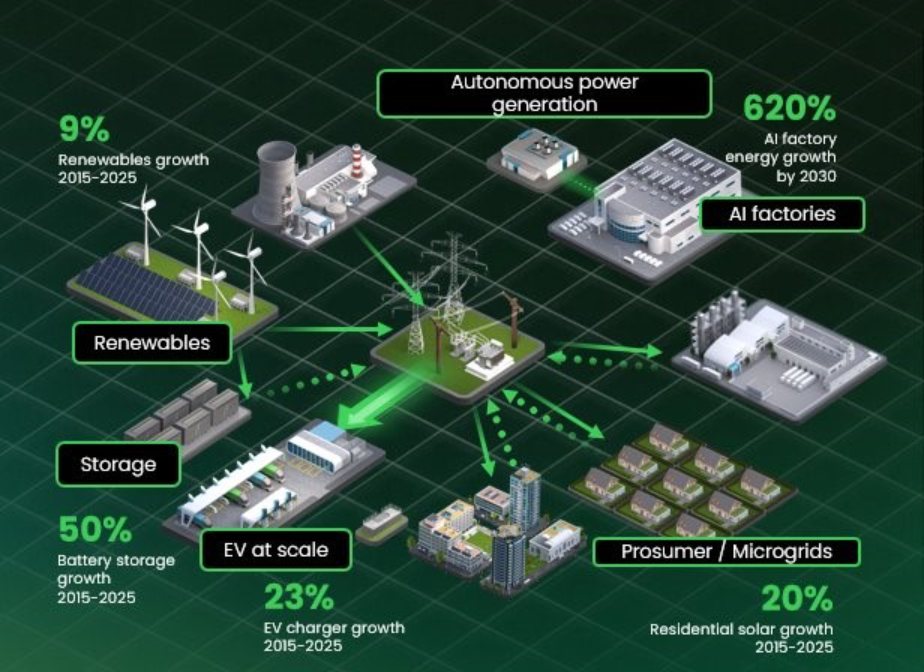
The electric distribution system is highly interconnected, continuously energized, and increasingly dynamic as DER adoption, electrification, switching operations, and reliability requirements continue to evolve. As a result, utilities need more than asset locations and connectivity. They need a network model that reflects operational behavior and supports grid-aware decision-making across the enterprise.
Within the EcoStruxure ArcFM ecosystem, utilities can manage detailed network characteristics including phase-specific connectivity, feeder hierarchy, circuit boundaries, switching configurations, protective device relationships, substation connectivity, and customer-to-transformer associations.
This operational context helps organizations understand where assets are located. It also shows how electricity moves through the system and how network changes affect customers and operations.
Engineering and operations teams can evaluate construction projects against existing feeder configurations, identify affected customers before planned work begins, verify network connectivity, and maintain alignment between design and operational systems as the grid evolves.
As DER integration and electrification continue to accelerate, maintaining accurate electrical connectivity becomes increasingly important. Utilities need a reliable understanding of feeder topology, device relationships, and power flow to support grid planning, reliability analysis, outage management, and distributed resource integration.
By preserving these relationships through governed workflows, validation rules, and utility-specific processes, EcoStruxure ArcFM provides the operational context required to support both today’s reliability objectives and tomorrow’s digital grid initiatives.
The value of this network intelligence becomes most evident when it is applied to real-world utility operations.
Real-world use case: Supporting grid modernization at scale
Grid modernization initiatives depend on accurate and well-governed network information.
Before utilities can successfully deploy advanced technologies such as ADMS, DERMS, advanced analytics, or AI-driven applications, they must first establish a connected and operationally accurate model of the network.
EcoStruxure ArcFM provides the tools needed to create, govern, validate, and maintain that model. Automated QA/QC processes, intelligent editing capabilities, workflow orchestration, and enterprise-scale governance help utilities maintain network integrity as infrastructure evolves.
This allows organizations to confidently implement grid modernization initiatives while reducing deployment risk. Rather than modernizing isolated systems, utilities can modernize their operational ecosystem around a common understanding of the network.
Real-world use case: Connecting design and operations
One of the most impactful challenges utilities face is moving network changes efficiently from design and construction into operations.
Historically, construction drawings, field markups, and manual record updates often created delays between project completion and operational readiness. Engineering teams designed the network, field crews built it, and GIS teams updated records later. The result was duplicate work, inefficiencies, and opportunities for error.

EcoStruxure ArcFM digitizes and connects this lifecycle.
Designers create GIS-based network models that integrate with work management, asset management, and operational systems. Validation occurs much earlier in the process, helping utilities ensure assets are operationally ready before energization. As-built conditions can be captured directly from the field, reducing manual data entry and improving data quality.
The outcome is higher-quality network information, faster project execution, safer operations, and improved service reliability.
Real-world use case: Enterprise-wide collaboration
Modern grid management depends on contributions from far more than traditional GIS teams.
Field personnel, operations centers, planners, customer service representatives, compliance teams, and engineering organizations all generate information that can improve network accuracy and operational awareness.
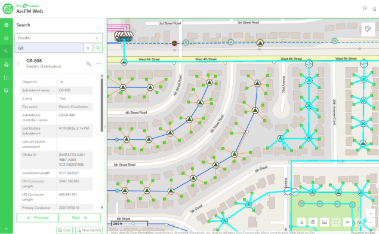
EcoStruxure ArcFM enables broader participation through ArcFM Web and ArcFM Mobile, giving employees across the organization access to consistent network information and governed workflows. Teams can view assets, submit updates, contribute observations, and participate in business processes without requiring advanced GIS expertise.
More importantly, they can work from a shared understanding of network conditions.
The result is improved coordination across departments, more accurate information, faster response to outages and customer requests, and better support for day-to-day operational decision-making.
Turning network data into better grid outcomes
Utilities are not investing in technology for technology’s sake.
They are investing in outcomes.
Utilities must maintain reliability while operating increasingly complex networks. They must support renewable integration, electrification, resilience initiatives, and growing customer expectations. They must improve safety, meet regulatory obligations, and control costs while modernizing infrastructure at scale.
As DER adoption accelerates and energy demand continues to grow, success will increasingly depend on a utility’s ability to understand and manage the grid as a connected system.
Utilities that successfully connect planning, engineering, construction, operations, and modernization initiatives around a common network model will be better positioned to improve reliability, accelerate innovation, and adapt to a rapidly changing energy landscape.
EcoStruxure ArcFM helps make that possible. By connecting people, processes, and systems across the grid lifecycle, it provides the operational foundation utilities need to transform network information into action, strengthen grid performance, and deliver reliable service in an increasingly complex energy future.


Add a comment