For years, colocation was built around a relatively simple proposition: The operator provides the facility, the customer provides the IT, and both sides agree on service levels.
Customers purchased space, power, cooling, and connectivity. In return, they expected reliable infrastructure, security, and uptime, with clearly defined responsibilities between the facility and the IT environment.
AI is changing that equation.
AI deployments span power systems, liquid cooling infrastructure, high-performance networking, GPUs, storage, software platforms, and operational teams. When a training job fails, determining the root cause can require sifting through multiple layers of infrastructure and ownership.
Facility uptime no longer guarantees workload success – and this creates a trust gap that must be addressed through transparency, standardization, and clearly defined responsibilities.
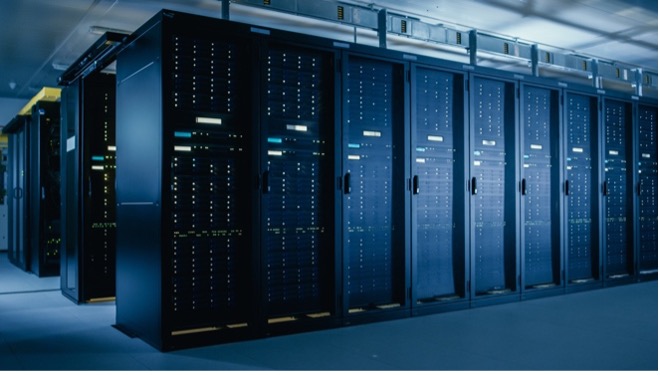
How is AI changing trust in colocation?
Historically, trust centered on infrastructure availability. The colocation provider delivered resilient facilities. The customer managed IT equipment. Service level agreements (SLA) measured facility uptime, power availability, and physical security.
That model worked because the boundaries between facility and IT were relatively clear. AI makes those boundaries harder to maintain.
With AI workloads, customers expect high-density power and liquid cooling readiness. They expect operational visibility, predictable scalability, recovery, and workload resilience. Customers want to protect their AI investments and need confidence that the infrastructure will perform as expected under demanding, rapidly shifting workloads.
When it comes to trust, customers won’t accept marketing claims at face value. Operators must provide measurable standards and transparent operations. In many ways, AI mirrors cloud computing, where shared responsibility frameworks became essential for defining who owns security, operations, compliance, and risk.
What makes a colocation facility AI-ready?
To be AI-ready, facilities must handle the engineering requirements of AI infrastructure, including:
- Racks density up to 227kW
- Direct-to-chip (DTC) liquid cooling
- Transient power behavior readiness
- GPU cluster resiliency
But engineering readiness alone isn’t enough.
The harder question is whether operators and customers have the same understanding of how that infrastructure will be monitored, measured, and managed.
True AI-ready colocation environments standardize three critical areas: visibility, SLA structure, and resilience assumptions.
AI colocation requires greater infrastructure visibility
Effective AI operations require transparency, with shared visibility into areas such as power utilization, cooling performance, environmental conditions, incident notifications, and asset health.
Traditionally, facility and IT monitoring systems were separate, creating blind spots. But AI infrastructure requires real-time, integrated visibility so teams can identify issues before they affect training, inference, or production environments.
Traditional colocation SLAs fall short for AI workloads
AI customers need more than traditional SLA uptime guarantees. They need clarity around areas like power stability, thermal anomaly detection, remediation timelines, and escalation ownership. AI workloads can fail even when facilities remain technically available, which means SLA frameworks must measure performance and outcomes relevant to AI operations rather than facility availability alone.
The question is shifting from “Was the facility available?” to “Did the infrastructure perform as expected for the workload?”
AI workloads depend on resilience standards
Perhaps the most overlooked challenge in AI colocation is the absence of standardized resilience assumptions.
Terms such as N+1, concurrently maintainable, fault-tolerant, and distributed redundant may mean different things to different organizations. Likewise, assumptions regarding generator runtime, cooling redundancy, UPS architecture, ride-through capability, and incident recovery often do not align across stakeholders.
Two organizations can use the same resilience terminology while designing for very different failure scenarios.
Trust erodes whenever assumptions differ. AI-ready colocation requires standardized resilience definitions so operators, partners, and tenants can design against the same expectations.
The emerging shared responsibility model
The future of AI colocation will not be defined by eliminating shared responsibility. It will be defined by making that responsibility explicit, with responsibilities assigned to providers, customers, and jointly managed domains.
| Provider Responsibilities | Customer Responsibilities | Shared Responsibilities |
| Facility infrastructure | Servers and GPUs | Monitoring and observability |
| Power availability | Applications | Incident response |
| Cooling performance | AI models | Performance management |
| Physical security | Data governance | Capacity forecasting |
| Building management systems | Cybersecurity controls | Change management |
| Capacity planning | Platform operations | Compliance reporting |
| Sustainability reporting | Workload architecture | Business continuity planning |
Defining these boundaries early will reduce operational friction, accelerate deployments, and build stronger customer confidence. More importantly, it can prevent ownership disputes when an AI workload is disrupted.
Standards will become a competitive differentiator
As AI deployments scale, customers will demand consistency across sites, providers, and regions. Colocation providers that establish standardized frameworks for requirements such as visibility, SLA reporting, resilience, and shared responsibilities will differentiate themselves from those delivering only facility metrics.
As with utilities and telecommunications networks, customers expect predictable outcomes, transparent operations, and measurable accountability.
The providers that can clearly demonstrate what their infrastructure can support, how performance is measured, and where responsibility sits will have an advantage as AI deployments become more complex.
Operators must build trust into design, with transparency, standardization, and clearly defined operating models as key components. Trust then becomes an engineered outcome that is designed, measured, and proven — not just a marketing message.
Don’t wait for an AI workload failure to expose gaps in your infrastructure assumptions. Bring facility, IT, operations, and technology teams together to define ownership, align resilience expectations, establish workload-relevant SLAs, and improve operational visibility. AI readiness shouldn’t be a claim. It should be a measurable, repeatable, and transparent operating model that customers can trust.
To learn more, explore Schneider Electric’s AI solutions and discover resources for building AI-ready infrastructure.




Add a comment